
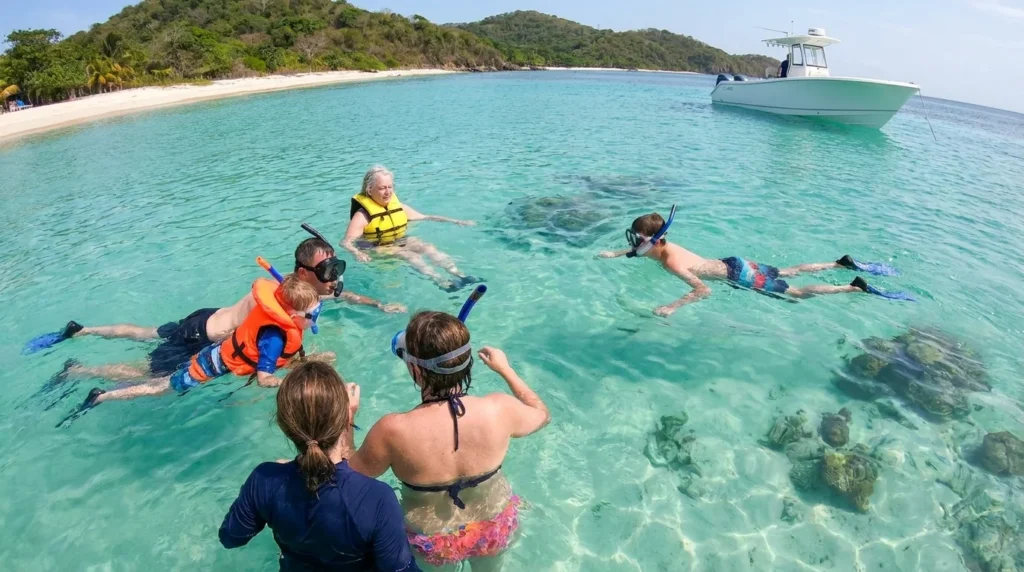
Your group might have a strong swimmer, a nervous first-timer, and a grandparent who would rather float than swim. In that case, the best Roatan snorkeling excursion is usually a private one. It should be built around a calm, shallow spot, with flotation for anyone who wants it and a guide who sets the pace for the slowest person, not the fastest. Add something on land so anyone who changes their mind still has a great day. That combination takes care of most of what mixed groups worry about.
Here’s how to figure out which kind of trip fits your crew, and what to ask before you book.
What makes snorkeling hard for some people, and how to fix it
Most people who say they “can’t snorkel” can float just fine. Something else is usually bothering them. It might be deep water under their feet, small waves slapping the mask, a crowded boat ladder, or feeling rushed while everyone else is already off chasing fish.
So before you compare tours, look at these four things.
How you get into the water
Some snorkel spots are reached by walking in from a beach. Others mean climbing down from a boat into open water. A confident swimmer won’t care either way. For a nervous one, being able to stand in waist-deep water, adjust the mask, and try again makes all the difference. If your group is mixed, ask where the entry is and whether there’s a shallow area to practice first.
Depth and current
Roatan sits on the Mesoamerican Barrier Reef, and in many places the reef starts close to shore. That’s good news for beginners, because you can see healthy coral and plenty of fish in fairly shallow water. Conditions still change with the wind. A spot that’s glassy one morning can be choppy the next. A guide who can switch to a calmer site that day matters more than any particular location on a map.
Flotation
A snorkel vest or life jacket lets a weak swimmer lie flat on the surface and just look down. No hard kicking, no struggling to stay up. Ask what flotation is available and in which sizes, especially if you’re bringing kids.
Pace and group size
On a big shared boat, the schedule belongs to everyone on board. On a private trip, it belongs to you. If your daughter needs ten minutes in the shallows before she’s ready, nobody is waiting on her.
Why a private Roatan snorkeling excursion suits mixed groups
Larger group trips work well for lots of travelers, and if everyone in your party is comfortable in the water they can be a good fit. Mixed groups need more flexibility than a fixed program usually allows.
On a private tour, your guide can:
- Start everyone in shallow water and move out only when the whole group feels ready
- Let stronger swimmers range a little further while staying within sight
- Wrap up the snorkel early if someone has had enough, without ruining the rest of the day
- Pick the calmest spot based on that day’s wind and water
Our snorkeling tour with the monkey, sloth and bird park plus island highlights was put together with groups like yours in mind. Snorkeling is one part of the day, not the whole thing. The person who prefers to stay dry still gets to watch monkeys, sloths, and birds in their habitat from a respectful distance, and still sees the island. Nobody spends hours on a towel waiting for the others.
If you’re still deciding whether your group even wants to snorkel, we compared the two options in choosing between a beach day and a snorkeling tour in Roatan.
A simple plan that keeps everyone comfortable
- Be honest when you book. Tell us who swims well, who doesn’t, and how old everyone is. It changes how we plan the water time.
- Practice in the shallows first. Even good swimmers benefit from a couple of minutes getting used to the mask before heading over the reef.
- Pair each beginner with a buddy. Ideally a calm, confident swimmer who’s happy to stay close and not wander off.
- Agree on a signal for “I’m done.” A raised hand works. It takes pressure off people who feel they have to keep going.
- Keep a dry option in the plan. Sitting out the snorkel should feel like a normal choice, not a failure.
Tips for first-timers and nervous swimmers
A few small things make a big difference for someone who has never snorkeled.
Test the mask fit on land. Place it on your face without the strap, breathe in gently through your nose, and it should stay put on its own. Keep hair out of the seal, since even a few strands let water in.
Then stand in shallow water, put your face in, and just breathe through the snorkel for a while. Slow, relaxed breaths. Once that feels normal, lean forward and let the vest hold you up.
Kick slowly from the hips with long legs. Fast, bicycle-style kicking wears people out and stirs up sand. If water gets into the snorkel, lift your head, float on the vest, and blow it out or simply take it out of your mouth and breathe. There’s no rush.
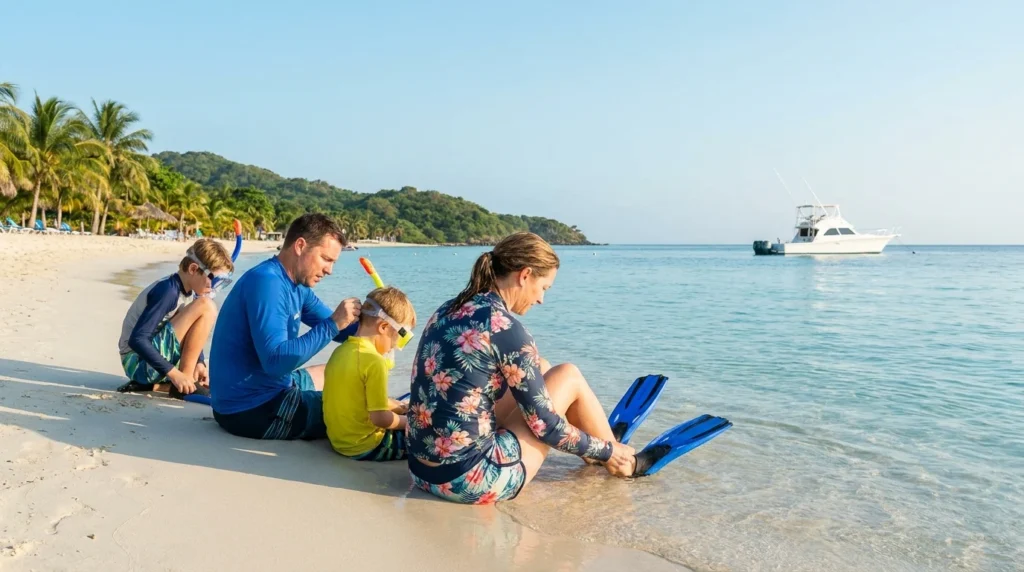
Fins help a lot, but some beginners feel clumsy in them at first. Putting them on while sitting in shallow water, or while floating, is easier than trying to walk in them.
Reef rules for every swimmer, strong or not
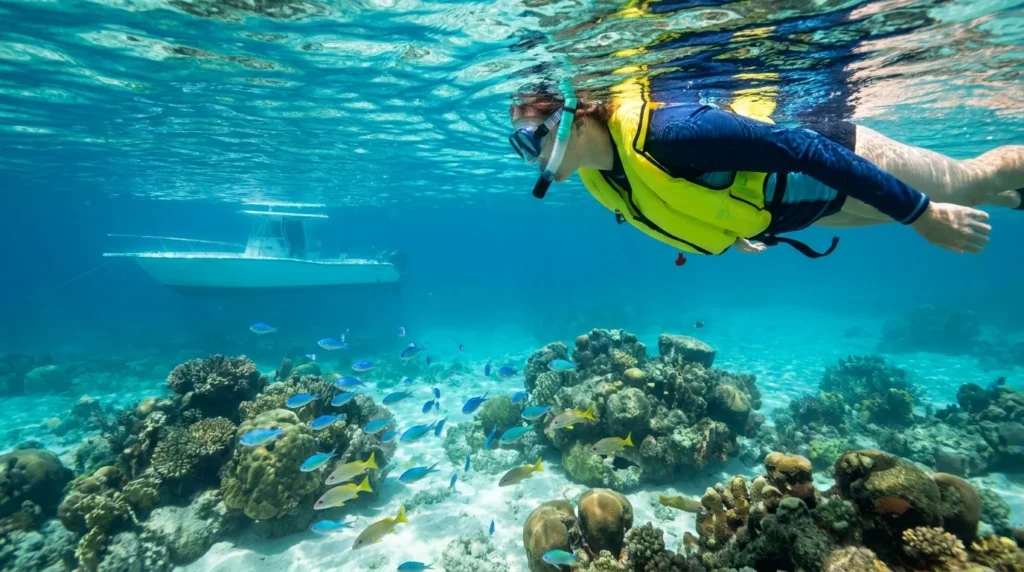
The coral here is alive and grows very slowly. Beginners are the most likely to touch it by accident, usually when they try to stand up to fix a mask. Teach your group to float and fix things on the surface with the vest holding them up, or to stand only on bare sand. Never stand on coral and never grab it, even if you’re tired.
The same goes for anything you see down there. If a sea turtle, ray, or school of fish swims by, enjoy watching from a distance and let it go about its day. Don’t chase, touch, or feed anything.
Wear reef-safe sunscreen and put it on well before you get in so it has time to soak into your skin. A long-sleeve rash guard is even better. It protects your back, which is the part that gets the most sun while you float face-down, and it means less sunscreen in the water.
What if someone won’t get in at all?
That’s completely fine. Some people come to Roatan to look at the water, not to be in it. A tour that mixes snorkeling with time on land is the easiest fix, because their day is full either way.
If most of your group would rather keep things easy, have a look at our lower-activity Roatan sightseeing tour for cruise passengers. It covers how to see the island without much walking or swimming.
Planning around a cruise day
Many mixed groups are cruise passengers with a fixed all-aboard time. That makes calm, unhurried planning even more important. A nervous swimmer who feels the clock ticking will have a harder time relaxing in the water.
When you contact us, send your ship name, the date, and your all-aboard time. We’ll plan the day around it so there’s room to take things slowly in the water and still get back comfortably. We don’t give exact times here because they depend on your ship and the conditions that day, so just ask.
What to bring
- Reef-safe sunscreen
- Swimsuit worn under your clothes
- A rash guard or a light long-sleeve shirt for the water
- Towel and a change of clothes
- Hat and sunglasses for the time on land
- Drinking water
- A small dry bag or waterproof pouch for your phone
- Your own mask, if you have one that fits well
Questions people ask before booking
Do you need to know how to swim to snorkel in Roatan?
Not necessarily, as long as the person is comfortable floating in a vest in calm, shallow water and stays close to the guide or a buddy. Someone who is truly afraid of the water should never feel pushed. Watching from the beach or the boat is a fine choice.
Can young kids snorkel?
Many children do well with a properly sized vest and a mask that fits their face. Let us know their ages when you write, so we can talk through what will work for them.
Will we see turtles?
Sometimes, but nobody can promise wildlife. Fish and coral are what you can count on, and on a good day that’s plenty for a first-timer.
Send us a message with your group’s ages, swimming levels, and ship schedule, and we’ll tell you honestly how our snorkeling and wildlife tour would work for your crew.