
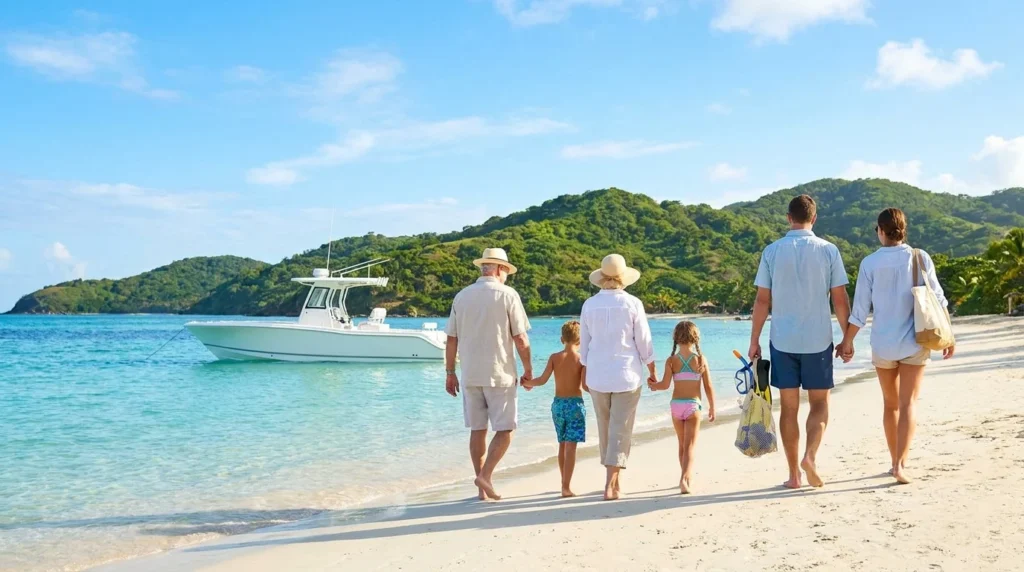
If your group mixes English speakers and Spanish speakers, the easiest way to plan a tour in Roatan Honduras is to book it privately, say who speaks what from the very first message, and choose stops where the important parts (safety talks, reef rules, the time you need to be back at the ship) can be explained clearly to everyone. Do that and nobody spends the day nodding along without understanding.
We see this mix all the time. Grandparents from Tegucigalpa or San Pedro Sula meeting their grandkids from Houston. A couple from Toronto traveling with the wife’s cousins from Mexico. Some relatives search “tour en Roatán Honduras” while others type “Roatan tours,” and they all end up on the same boat.
Roatan already lives in two languages
This works in your favor. Honduras is a Spanish-speaking country, but the Bay Islands have a long English-speaking history, and many islanders grew up speaking English at home. Plenty of people from the mainland have moved here too, so you’ll hear Spanish in the shops, on the water taxis and at the food stands.
In practice, both halves of your group will find someone to talk to almost anywhere. The challenge is not the island. It’s making sure the parts of the tour that really matter reach everyone in a language they fully understand.
Where language actually matters on a tour
Small talk, jokes and history stories are nice in both languages, but nobody gets hurt if Grandpa misses a punchline. These are the moments where you want zero confusion:
- Safety briefings. Snorkel instructions, zipline rules and anything involving gear or water.
- Reef and wildlife rules. Never touch or stand on coral. Watch animals from a distance; in Roatan it is prohibited to hold, touch, feed or pose with sloths, monkeys, macaws, iguanas, turtles or dolphins.
- Meeting points and times. Especially on a cruise day, where “back by” is not a suggestion.
- Health details. Allergies at lunch, a bad knee, someone who doesn’t swim well.
If you only plan around these four things, you’ve handled most of what can go wrong with a bilingual group.
How to plan a bilingual tour in Roatan, step by step
- Tell us the language mix when you book. Something like “six adults, two only speak Spanish, the kids are bilingual” helps a lot. It lets us plan the day and the explanations around your group instead of guessing on arrival.
- Pick a bridge person. Every mixed family has one: the cousin who switches between languages without thinking. Ask them to stay near the guide during briefings and repeat anything key for whoever needs it.
- Share the basics before the trip. Send the family group chat a short note in both languages: what to wear, reef-safe sunscreen only, and the all-aboard time if you’re on a ship.
- Choose stops that speak for themselves. Beaches, snorkeling and wildlife viewing need very little translation. Long historical walks depend more on narration.
- Agree on one meeting rule. One place, one time, said out loud in English and Spanish. Simple, but it’s what keeps a group of twelve from turning into three groups of four.
Activities that work well for mixed groups
Beach time and snorkeling
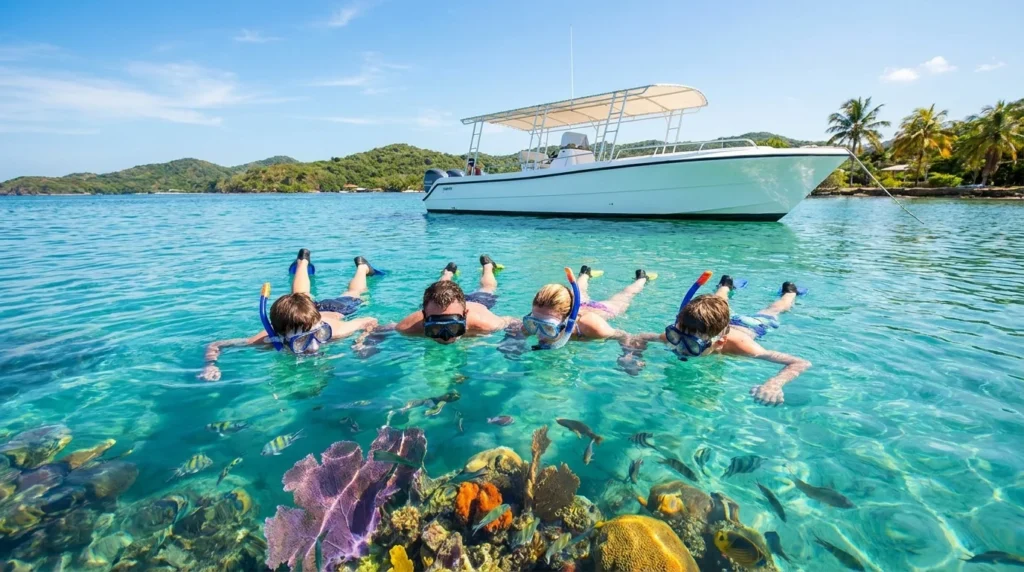
The ocean doesn’t need a translator. Once everyone understands the safety talk, a snorkel stop is the same experience for the Spanish-speaking aunt and the English-speaking teenager. Float, look down, keep your fins off the coral. Make sure every swimmer in the group heard that last part in their own language, because people tend to stand up when they get tired, and that’s when coral gets damaged.
Wildlife and island scenery
Seeing monkeys or sloths in the trees is a crowd-pleaser for every age. The rule is the same in any language: look, take photos from a distance, and let the animal be. Explaining that clearly before you arrive avoids awkward moments with kids who want to get closer.
Zipline and diving
These are the activities where understanding the briefing really matters. If someone in your group is unsure about the instructions, it’s completely fine to ask for them to be repeated or for your bridge person to translate before anyone clips in. For scuba, including our Roatan tours and diving options, mention the language mix when you message us so we can talk through what works best for each diver.
Private or shared tour for a bilingual family?
For mixed-language groups, a private tour is usually the smoother choice. The guide can slow down, repeat things, switch languages when needed and adjust stops to the grandparents’ pace or the kids’ energy. On a large shared tour, the narration tends to follow the majority, and it’s harder to stop and explain something twice.
If you’re still weighing your options, our article on private tours compared with cruise line excursions walks through what each format offers, so you can pick the one that fits your family.
Cruise day tips for multilingual groups
Ship days have one fixed point: the time you need to be back. Everything else can bend around it. A few things help:
- Write the all-aboard time on everyone’s phone in their language, not just the organizer’s.
- Keep the plan simple. Two or three stops done calmly beat five stops done in a rush with constant translating.
- Leave a buffer at the end. Groups that stop to explain things take a little longer, and that’s normal.
For more on matching activities to a port day, see how to choose an excursion for your cruise day in Roatan.
What to pack, in any language
Reef-safe sunscreen, a hat, water, a light cover-up, cash in small bills for snacks or souvenirs, and water shoes if someone has sensitive feet. Bring a dry bag for phones. If anyone in the group has allergies, write them down in both English and Spanish on a note or in your phone, so you can show it at lunch without having to explain it on the spot.
Questions families ask us
Do people in Roatan speak English?
Yes, many islanders speak English as a first language, and Spanish is widely spoken as well. Most visitors get by comfortably in either one.
Can the tour be explained in both English and Spanish?
Tell us your group’s language needs when you write to us and we’ll let you know how we can plan the day around them.
How long should we plan for a tour?
It depends on the stops you choose and your ship schedule. Send us your arrival and departure times and we’ll help you put together a day that fits.
If your family speaks a bit of both, send us a message with your dates, ship times and who speaks what, and we’ll help you plan a private Roatan tour that works for everyone in the group.