
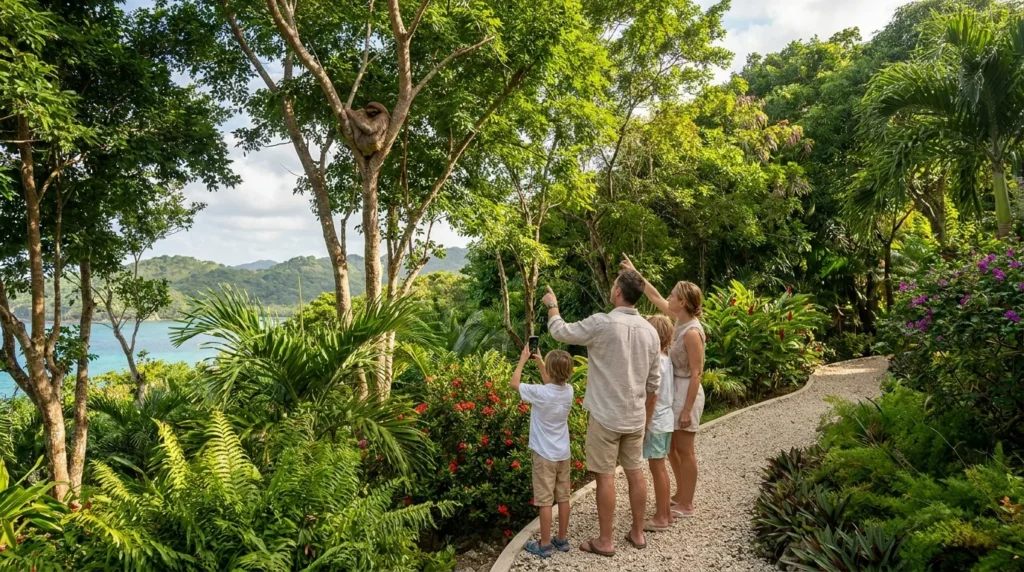
If you’re hoping to see a Roatan sloth on your trip, the honest answer comes first. There’s a good chance it will be asleep when you get there. Sloths rest for a big part of the day, usually curled into a tight ball high in a tree, and they don’t change that habit for anyone’s cruise schedule. That doesn’t make the visit a letdown. It means the way you plan your port day, and what you expect when you arrive, matters more than most people think.
Here’s what we tell guests before they head out to see the sloths on the island.
Why sloths sleep through so much of the day
Sloths live on leaves. Leaves are hard to digest and don’t give much energy, so a sloth’s whole body is built around saving it. They move slowly, digest slowly and spend long stretches resting without moving at all.
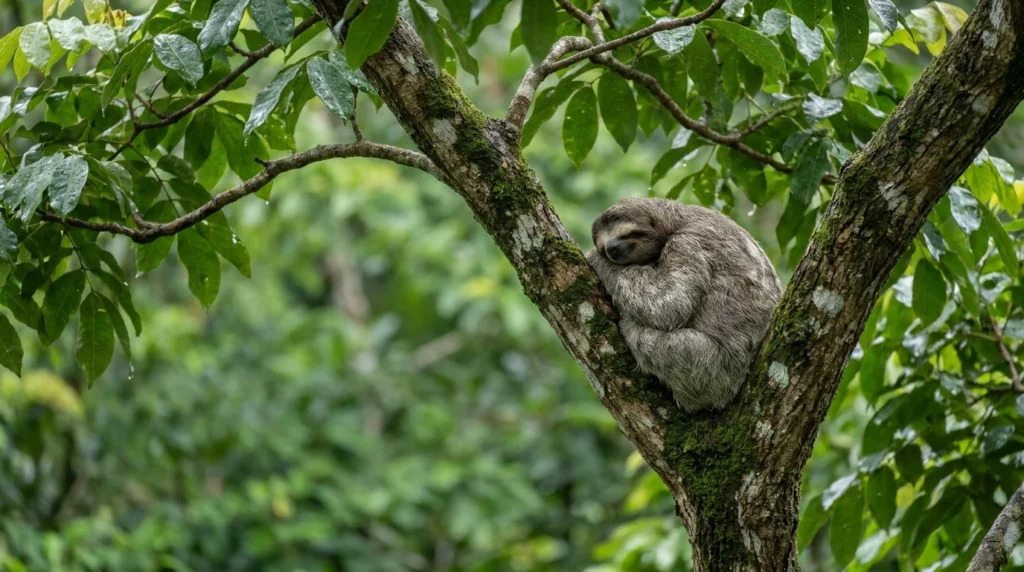
In practice, a sloth you see at 11 in the morning may look exactly like it did at 10. A brown, fuzzy shape wedged in the fork of a branch, head tucked into its chest. Every so often it shifts, stretches a long arm, scratches, or reaches for a leaf. Then it settles back down.
Many sloths are more active in the evening and at night, which is part of why daytime visitors so often find them dozing. Cruise guests are on the island during daylight hours, so you’re visiting during their quiet time no matter which stop you pick.
What timing your Roatan sloth visit really means on a cruise day
You can’t book a sloth for an awake slot. What you can control is how much time you give yourself at the stop and how rushed the rest of your day feels.
The guests who leave happiest are usually the ones who weren’t watching the clock. A sloth that’s asleep when you walk up might roll over, open its eyes or start a slow climb a few minutes later. If you’re already heading back to the van, you miss it.
A few things make a real difference:
- Don’t stack too much into one port day. Three or four rushed stops leave you glancing at a sleeping sloth for a minute and moving on. Fewer stops with breathing room works better.
- Plan backward from your all-aboard time. Count back from when you need to be at the ship, leave a comfortable buffer for traffic, and see what fits. A sloth stop squeezed into the last half hour rarely feels good.
- Consider a private tour if you like to linger. With your own guide and vehicle, you can stay a bit longer when the animals are doing something worth watching and move on sooner when they’re fast asleep.
- Pair the sloths with things that don’t depend on wildlife. A zipline, a scenic drive or a beach stop means your day is great even if the sloths are in full nap mode.
That last point is why our zipline, monkey and sloth hangout and city tour works well for cruise guests. The animals are one part of the day, not the whole thing, so a sleepy sloth is a sweet moment instead of the only moment.
What you’ll actually see at a sloth hangout
Set your expectations for watching, not interacting. You’ll be looking up into the trees a lot. Sometimes the sloth is easy to spot. Other times it blends in so well with the bark and leaves that it takes a guide pointing it out before you see the shape.
Once you find it, slow down. Watch for small things. A claw adjusting its grip. A face turning toward the light. A slow, almost lazy yawn. People who expect a show tend to be disappointed, and people who expect a quiet animal doing its own thing tend to love it.
The monkeys are usually the opposite. They’re busy, curious and moving around, so between the two you tend to get a mix of calm and action. If you want a fuller picture of how these stops work for cruise passengers, we wrote about it in what to expect when visiting monkeys and sloths in Roatan.
Why you watch from a distance, even when the sloth is right there
In Roatan it’s prohibited to hold, touch, feed or pose with wild animals. That includes sloths, monkeys, macaws, iguanas, turtles and dolphins. We follow that rule on every tour, and we ask our guests to do the same.
It also makes sense once you know how sloths live. An animal that runs on very little energy and spends much of the day resting doesn’t need to be woken up, handled or passed around for photos. Being left alone is good for them. Watching quietly from a respectful distance gives you a more natural look at how they actually behave.
If you’re traveling with kids, it helps to talk about this before you arrive. Let them know the sloth might be sleeping, that everyone keeps their hands to themselves, and that spotting it first is the game. Kids usually get into it fast.
How to get good sloth photos without getting close
A sleeping sloth high in a tree is a tricky photo, but it’s doable.
- Use the zoom on your phone or bring a camera with a longer lens. Even a modest zoom helps a lot.
- Turn the flash off. It won’t help at that distance and it isn’t kind to a resting animal.
- Be patient for movement. The best shot is often the few seconds when the sloth lifts its head or reaches for a branch.
- Step back for a wider shot too. A small sloth in a big green tree tells the story of the island better than a blurry close-up.
Bright midday sun creates harsh shadows under the canopy. A cloudy moment or a patch of shade often gives softer, clearer photos.
What to bring for the stop
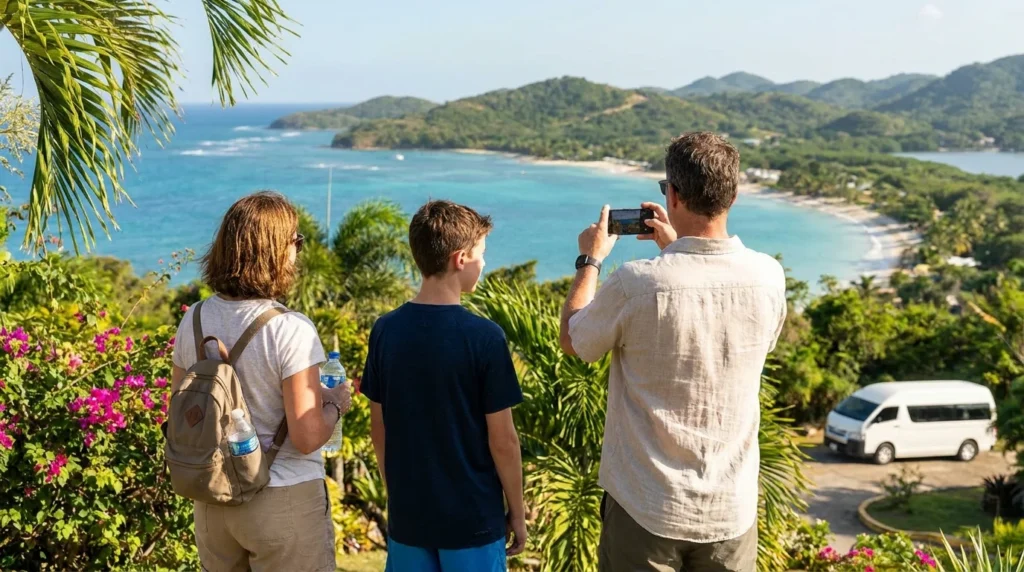
Nothing fancy. Comfortable shoes for paths and steps, water, and bug spray, since you’ll be among trees and plants. Roatan can go from sunny to a quick shower and back in the same hour, so a light rain layer or a small umbrella in your bag is a good idea.
Sun protection matters too. If your day includes a beach or snorkel stop after the animals, bring reef-safe sunscreen so you’re ready for the water. It’s better for the reef, and you won’t have to switch products halfway through the day.
Is it worth it for families and less active travelers?
For most people, yes, as long as they know what they’re walking into. Young kids, grandparents and first-time visitors to the tropics often say the sloths were the part they talked about later, even when the animal barely moved.
If walking or heat is a concern in your group, choose a day built around comfort rather than covering ground. Our post on a lower-activity Roatan sightseeing tour covers how to see the island at an easier pace, and the sloths fit nicely into that kind of day.
What usually isn’t worth it is racing to a sloth stop just to check it off a list. Give it a little time, keep expectations relaxed and let the animal set the pace.
If you’d like to fit the sloths into your Roatan day, send us a message with your ship, docking date and all-aboard time. We’ll tell you honestly what fits, how the day would flow and what to expect at each stop.